Microfictions 2
August 7, 2026
A few more microfictions, still no LLMs.

Personal website
A few more microfictions, still no LLMs.
A few microfictions, very much inspired by Quiet Pine Trees. I hope to add more over time. No LLMs.
Anthropic recently released Claude 4 Sonnet and Claude 4 Opus, and I’ve been using them at work for the last two days. 4 Opus seems okay, but 4 Sonnet feels “off” – less sharp than 3.7 Sonnet. My assessment is almost entirely vibes-based, just from chatting with the models and using Claude Code a bit.
I’m deeply fond of weighty phrases – little snippets with cultural gravitas and mystical overtones. Most of my favorites have biblical origin or are fragments of culturally foundational art, remixed memetically over the centuries until they become units of their own. A few of my favorites:
Warning: fully political post, which is not the typical genre here and not the vibe I’m mostly trying to cultivate. I pretty much stand by this, though my emotions have cooled in the weeks since the election.
Like many people with my demographics, I’ve long had strongly materialist and utilitarian philosophical intuitions. I think empirical science is a good way to learn about the world; material explanations suffice for most phenomena we encounter in everyday life; more people having more well-being is better than fewer people have less well-being. But over the last two-ish years, these intuitions have unmistakably softened. I attribute this change to several causes, roughly ordered:
There’s a great bagel shop near my house that has consistently long lines on weekend mornings. This is a market failure: if the line is predictably and consistently long, then the price in dollars is not high enough. The bagel shop could charge more on weekend mornings, which makes them better off; the average customer would then pay more in dollars but less in time.1
The mixture of customers might change. In a higher price regime, people who were previously excluded by the high time cost of the line (busy parents?) might opt in, while people who can’t afford the new higher price opt out. ↩
I’ve been reading Jeff Kaufman’s blog for years because he’s well known in the effective altruist1 space and local to the Boston area. We’re also now coworkers, which is pretty cool. One of many things I like about Jeff’s blog: he interleaves many different kinds of posts. Some are deeply technical or philosophical, but others are quick notes about what’s going on in his life. This variety imbues the blog with a pleasant texture.
I’m peripheral and sympathetic, or sorta an EA, or an EA who doesn’t want to extrapolate logic to its extreme, or something like that. I keep meaning to write about this, but the words don’t come naturally…which is presumably a reason to write about it. ↩
Since roughly 2009, I’ve wrestled daily with how to be a moral eater. My thoughts and uncertainties have evolved over time, so as both a time capsule for myself and an exercise in writing-clarifies-thinking, I thought I’d jot down my current status.
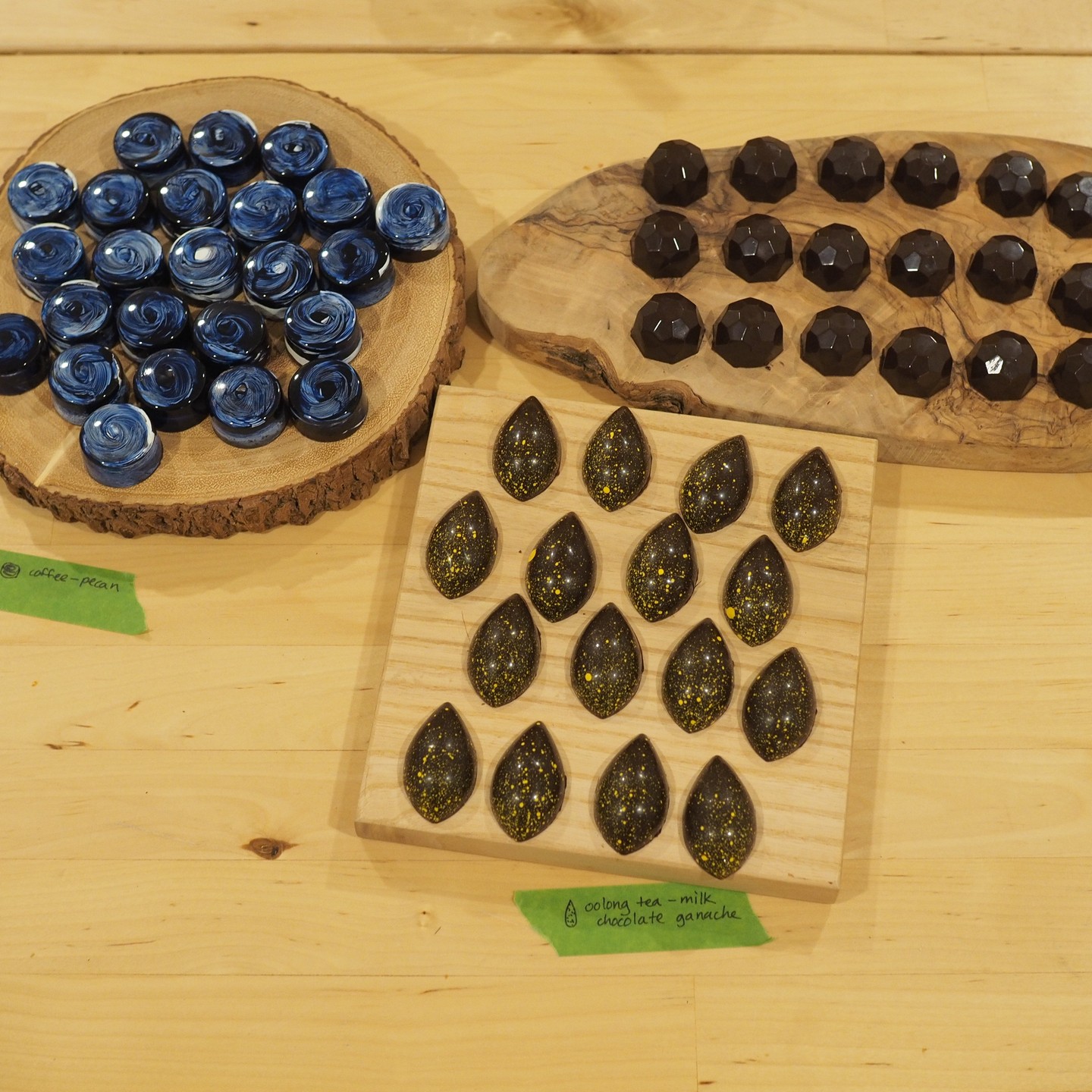 tldr: microplane 2% seed chocolate into fully melted chocolate at 94F and shake the heck out of it.
A previous post estimated Cambridge’s non-metered street parking at 31,474 spaces, approximately one per car-owning household. But these spaces constitute a minority of Cambridge’s total parking supply. Here I estimate two other big chunks of our total supply:
Inspired by Sam Bowman, a list of consumer products I derive a ton of benefit from. I recommend them if your preferences are at least vaguely similar to mine.
Depressingly many political arguments in Cambridge are about parking.1 Despite this, it’s not at all obvious how much parking we already have. I’ve been interested in Cambridge’s land use and how much is eaten by cars for a long time, at least since 2021, but doing the full census I crave seems hard and expensive. After reading Henry Grabar’s new book on parking I was motivated to at least pick the low hanging fruit: I estimated the prevalence of street parking, which probably constitutes the plurality of Cambridge’s parking supply. Cambridge’s GIS department (and thus presumably the City itself) does not have any data on street parking spaces; but using their data on road centerlines and some manual data labeling, I have estimated that the city contains 31,474 non-metered street parking spaces.
Sometimes parking is a fig leaf for other concerns not expressable in polite company. ↩
I’ve just arrived home from an ear surgery wherein a hole in my eardrum was patched. While the eventual outcome and success of the surgery remains to be seen, the experience is already overwhelmingly gratitude inducing. Some things for which I am grateful, in no particular order:
This post is about Pluto.jl, a reactive notebook environment for the Julia programming language. Spoilers: I recommend it!
I recently had a conversation with coworkers about what they look for in a restaurant: vibes or food. Most people answered, roughly, “mostly vibes as long as the food is at least decent.” This is wild to me; I’m very much optimizing for food quality. Even more recently, my wife and I tried a much recommended pizza place which turned out to be aggressively Not Good. From these and similar meditations I come to two conclusions:
An exploration of grid system design space, and an alternative to the typical options like H3 and S2.
For my entire adult life (and most of my teenage life), I’ve had a casual interest in computer graphics, especially 3D graphics. Accordingly, I’ve been idly tinkering with Blender1 off and on since about 2005, though don’t let the long history fool you: I have yet to achieve any meaningful proficiency, let alone skill. For normal mortals, getting good at 3D art requires dedicated practice, and I’ve treated Blender as merely a toy to be played with now and again. (To be clear, in capable hands it is much more than just a toy–though let the record show I firmly believe toys are important, even for adults.)
Blender is the leading open source 3D art program, and a shining example of how great open source can be. ↩
Update: the system described in this post no longer works, as PandaPay appears to be defunct. If you know of a replacement for PandaPay or the system described in this post, please let me know!
Results from the recipes I’ve tried thus far have been decidedly mixed. In any particular case, error on my part could easily explain dissatisfying results. But repeat mediocrity makes me suspicious: I’m not an expert or professional baker, but I am an experienced amateur baker who has taken pains to follow these recipes faithfully (e.g. measuring yeast and salt with a scale that has a .01g resolution). The several partial-failures have moved my priors in the directions of “I am not that smart or good at reading,” “I am not as good a baker as I thought,” and “these recipes are not well communicated.” I’m confident the recipes are fantastic when perfectly executed, but the results I’ve had thus far make me suspect Modernist Bread would be a better book if effort and ink had been reallocated from beautiful full-page photos to more detailed recipes.
Modernist Bread is the latest book (or series of 5 or 6 books, depending how you count) from the Modernist Cuisine team. It’s two and a half thousand pages of bread history, science, techniques, recipes, and so forth. I am most fortunate to have received it as a gift, and since both bread and modern cooking are topics near and dear to my heart, I’m super excited to read it. I’m just a few pages in, but this post lists some thoughts thus far and presumably will be updated as I continue to read.
Note: this post was put together on a whim on a Friday afternoon; the analysis is woefully incomplete. I hope to update it, though my historical track record on updating blog posts and personal projects is remarkably terrible. That said, if you have any relevant information or insights, please reach out!
I was thinking about the 2016 U.S. Presidential election - unfortunately, that happens a lot these days. The number of electors allocated to each state depends on that state’s population, but the allocation is only updated after a census. I was curious how the allocation of electoral seats would change if the census were performed just before the 2016 election and whether that would have made the Electoral College result closer (spoilers: yes, but not by much).